Through innovation, problem solving, and growth, Health Simple is shifting global wellness trends into everyday thriving nutrition skills.
As a Clinical Nutritionist, you’ve likely heard (or even taught) the hydration guideline: “Drink half your body weight in ounces of water daily.” While simple and well-intentioned, this rule is increasingly viewed as outdated.

"Be water, my friend" ~ Bruce Lee
Here’s a science-backed update to hydration wisdom, especially important for aging clients, athletes, and those with chronic health conditions.
Why the Old Rule Falls Short
- Doesn’t account for age, kidney function, body composition, or activity level
- Ignores fluid contributions from food
- Omits electrolyte needs (like sodium and potassium)
- Can lead to under- or overhydration, especially in older adults
Modern Guidelines for Hydration
Institute of Medicine (IOM):
- Men: ~3.7 L/day (125 oz)
- Women: ~2.7 L/day (91 oz)
These totals include ALL fluids, including water, tea, and food moisture.
Clinical Formula:
30–35 mL per kg of body weight per day is more individualized and widely used in clinical nutrition.
Example: A 70 kg (154 lb) person needs ~2.1–2.4 L/day (71 oz-81 oz)
Electrolytes Matter
Electrolytes like sodium, potassium, and magnesium are essential for true cellular hydration. Over-consuming plain water without adequate electrolytes—especially post-exercise, during fasting, or with certain medications—can dilute sodium levels and impair function.
Encourage your clients to hydrate with:
- Mineral-rich water
- Pinches of sea salt with lemon
- Electrolyte powders (like Zero Lyte by Trace Minerals or homemade versions)
A Smarter Hydration Strategy
✔ Use urine color: Pale yellow is optimal; dark yellow is dehydration; No color; over hydrated
✔ Listen to thirst cues* (especially for older adults)
✔ Monitor for symptoms like fatigue, headaches, or dry mouth
✔ Include hydration from foods like fruits, vegetables, soups, and herbal teas
*For Elderly Adults: Recognizing other signs of dehydration, such as dry mouth, cracked lips, dark urine, fatigue, or confusion, is crucial, especially since thirst cues may be unreliable.
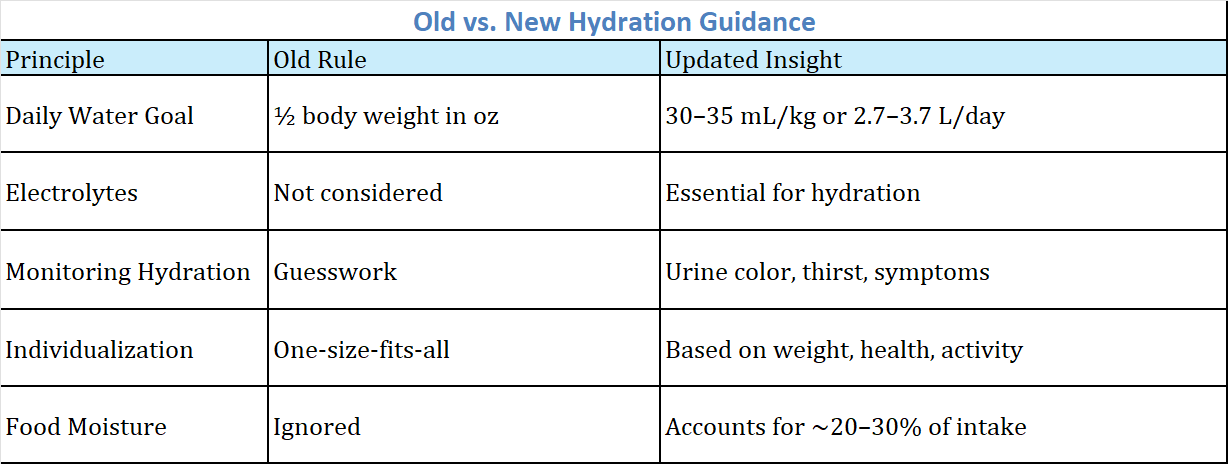
As you can see, hydration is a personal issue. Knowing your body and the signs and signals are important. And if you are a caregiver, then being aware could save someone's life.
For more hydration insights and personalized nutrition strategies, visit www.SuePetersen.com

- Aug 4, 2025
Rethinking Hydration: Beyond the “½ Your Body Weight in Ounces” Rule
- Sue Petersen
- 2 comments
2 comments

My rule for hydration is to drink when I'm thirsty and not worry about the number of ounces. I also watch the color of my urine. It has never been dark, so I guess this "personalized" rule works for me! I also eat a lot of fruits and vegetables. I think we sometimes forget how much water they provide. On really hot days, nothing satisfies my thirst better than some watermelon!
Great insights, Jody. Thank you for sharing your strategy. I agree that watermelon quenches the thirst! Keep up the healthy work. Sue